
Investment
Buying vs Building a Cable Car: Full Cost, Timeline and Risk Comparison
For investors and developers, the decision to buy an existing ropeway or build a new one is not mainly a question of which route is cheaper. It is a question of which risks you are prepared to underwrite and where the value-creation opportunity sits.
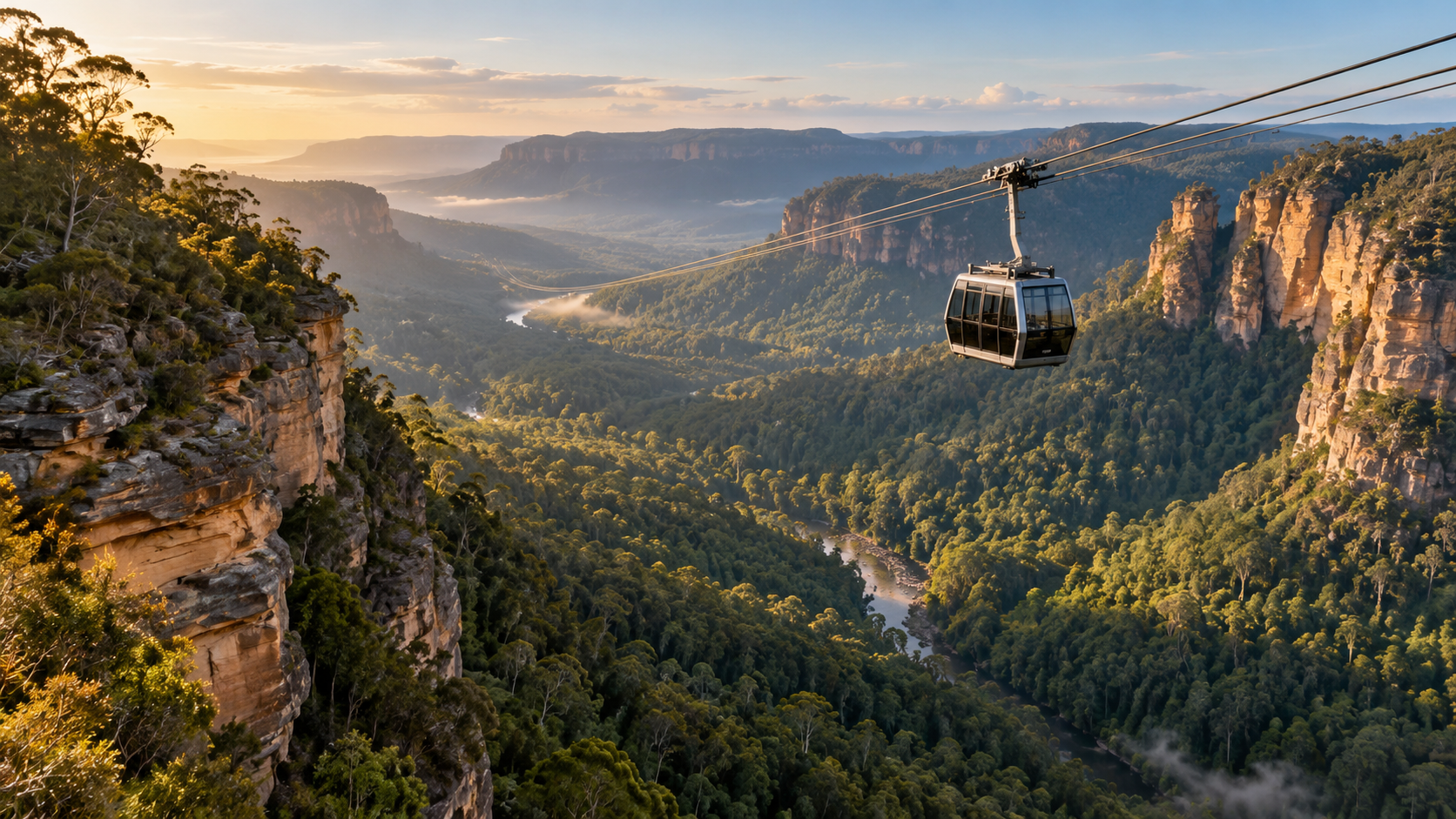
An aerial cableway car crossing a vast forested valley.
Buying an operating cable car gives you historical demand, existing infrastructure and cash flow, but it can come with deferred maintenance, legacy contracts and concession risk. Building a new gondola gives you control over route, technology and visitor experience, but requires you to take planning, construction and demand ramp-up risk before the first ticket is sold.
Elevate Collection’s own investment profile reflects both approaches: brownfield value-add in existing attractions and greenfield development of new ropeway and visitor infrastructure.
At a glance
Buying an existing asset usually offers faster access to operating cash flow, real ridership data, a known market position and lower development risk. The trade-off is that the buyer inherits the technical history, operating rights, staffing model and any capex backlog.
Building a new asset offers design freedom and the ability to optimise the full visitor proposition from day one. The trade-off is a longer pre-revenue period, greater capital uncertainty and more exposure to permitting, land, construction and forecast demand.
1. Upfront capital: acquisition price versus development cost
In an acquisition, the headline cost is the purchase price, but the real capital requirement can also include transaction costs, refinancing, immediate maintenance, life-extension works, station upgrades, commercial improvements and working capital.
A buyer should therefore distinguish between enterprise value and total capital required to execute the post-acquisition plan.
In a greenfield project, capital is spread across feasibility, design, permitting, land rights, ropeway equipment, stations, foundations, civil works, utilities, visitor facilities, commissioning, pre-opening costs, financing and contingency.
Published ropeway projects demonstrate how broad that range can be. The World Bank has historically cited many Latin American urban cable-car systems at roughly US$10–25 million per kilometre, while current projects vary widely depending on station count, system type and associated civil works. A developer should never use a generic cost-per-kilometre assumption as a substitute for site-specific feasibility and supplier pricing.
2. Timeline: when does the asset start generating revenue?
An acquisition can close in months once commercial terms, financing and due diligence are resolved. The buyer can then begin operating improvements immediately, subject to change-of-control approvals and any transition arrangements.
A greenfield project usually takes materially longer because the construction programme is only one part of the schedule. Route definition, environmental work, geotechnical studies, land rights, planning, public consultation, financing, design, procurement and authority approvals can take longer than physical installation.
The practical comparison is therefore not ‘months to build’ versus ‘months to buy’. It is time from investment decision to stable cash generation.
3. Demand risk: actual riders versus forecast riders
This is one of the biggest differences.
When buying an operating attraction, investors can analyse years of ridership, ticket yield, seasonality, channel mix, weather sensitivity, ancillary spend and operating availability. Forecasts can be anchored in observed behaviour.
For a new attraction, the developer relies on market research, tourism data, comparable attractions, transport flows, pricing studies and scenario modelling. Even a strong feasibility study cannot eliminate ramp-up risk.
Greenfield demand risk can be reduced when the destination already has proven high footfall, strong tourism infrastructure and a clear reason for visitors to add the new attraction to their itinerary.
4. Technical risk: known asset versus new system
Buying an existing ropeway does not mean technical risk is low. It means the risk is different.
The buyer needs specialist diligence on maintenance history, inspection reports, component replacement cycles, spare-parts support, obsolescence, downtime, safety compliance and major future capex.
A well-maintained older system can be a strong asset. A poorly documented system with deferred maintenance can turn an apparently attractive acquisition price into a much larger capital requirement.
A new system avoids legacy wear, but introduces design, integration, construction and commissioning risk. The developer must choose technology appropriate to wind, spans, capacity, terrain, evacuation and operating conditions, then manage manufacturer interfaces and civil works.
5. Permitting and land risk
Existing attractions often already have operating rights, land access and a recognised planning footprint. That can be a major advantage, especially in constrained nature or urban locations.
But buyers should not assume those rights are automatically transferable. Concession terms, leases, easements, environmental approvals and government agreements may contain renewal or change-of-control conditions.
Greenfield projects face the full permitting pathway. Route corridors, tower sites and stations may require multiple land agreements and authority approvals. Environmental, heritage, protected-area or community constraints can materially affect alignment and schedule.
6. Revenue upside: optimisation versus creation
In a brownfield acquisition, the investment thesis is often about improving an existing revenue engine. Typical levers include ticket yield, direct booking, distributing visitors across time slots to make full use of existing capacity, tour-operator economics, “second gates” such as F&B, retail, premium products and events, operating hours, procurement and maintenance efficiency. This can create attractive value because some improvements require operating expertise rather than major new infrastructure.
In a greenfield project, the developer can design the revenue model from scratch. Stations can be planned around hospitality, retail and events; capacity can be matched to demand; the booking journey can be digital from launch; and adjacent attractions can be integrated into the masterplan as second gates.
The upside can be greater, but it must be created before it can be proven.
7. EBITDA visibility and financing
Operating assets give lenders and equity investors historical financial statements and operating KPIs. That can make cash-flow underwriting more straightforward, provided the earnings are sustainable and capex is normalised.
Greenfield projects require financing against forecasts until operations are established. Investors therefore place more weight on sponsor strength, contingency, construction contracts, demand studies, permits, project governance and downside scenarios.
The stronger the pre-development work, the less uncertainty remains at financial close.
8. Management and operating capability
An acquisition comes with an existing team and culture. That is valuable if the organisation is strong, but it can also create integration issues or key-person dependency.
A greenfield project allows the operator to design staffing, training, maintenance systems, commercial processes and safety culture from the beginning. The challenge is recruiting and training that organisation before opening.
For both routes, specialist operating capability matters. Ropeway economics are shaped by the interaction of maintenance, capacity, guest experience, pricing and ancillary revenue.
9. Exit and long-term optionality
A brownfield asset with stable cash flow, secure operating rights and a transparent capex plan can become easier to finance and sell over time as performance improves.
A greenfield asset can create significant value once it moves from development risk to operating history. The step-change in risk profile after successful commissioning and demand ramp-up can be material.
That means the optimal strategy can also be sequential: develop, stabilise operations, then refinance or bring in long-term capital.
Which route is better?
Buy when the destination and asset are strong, historical demand is attractive, operating rights are secure and there is a clear path to improve earnings faster than a comparable project could be developed from scratch.
Build when the destination has a compelling unmet opportunity, no suitable asset is available to acquire, land and permitting are achievable, the developer has enough capital and patience for the pre-revenue period, and the new system can create a differentiated visitor proposition.
In some markets, acquisition followed by redevelopment is the strongest hybrid strategy: buy the operating rights and customer base, then modernise the system, stations and commercial offer.
A decision checklist
Before buying, answer: What is normalised EBITDA? What maintenance capex is due? How long are the operating rights? How reliable is the system? What is the true ticket yield? Which revenue improvements are executable? Which liabilities transfer with the asset?
Before building, answer: Is demand proven at the destination level? Is the route technically feasible? Are land and permits achievable? What is the full project budget including stations and contingency? How long to first revenue? What happens under a downside ridership scenario? Who will operate the asset after commissioning?
Frequently asked questions
Is it cheaper to buy an existing cable car than build a new gondola?
Not always. Acquisition price can be lower than replacement cost, but deferred maintenance, concession renewal, modernisation or station upgrades can increase the total capital required. Compare total invested capital, not just purchase price versus construction contract.
Which option is less risky?
An operating acquisition usually has lower demand and development risk because historical performance exists. It can still carry meaningful technical, legal and capex risk. Greenfield projects remove legacy asset risk but add permitting, construction and demand ramp-up risk.
How should investors compare returns?
Use scenario-based cash flows that include all capital required, time to revenue, maintenance capex, operating margins and exit assumptions. IRR alone can hide differences in duration, construction risk and downside exposure.
Can an old ropeway be a good acquisition?
Yes. Age alone is not decisive. Maintenance history, manufacturer support, remaining component life, operating rights, destination quality and the cost of planned upgrades are more important.
How does Elevate approach buy versus build?
Elevate Collection follows an acquire-develop-operate strategy. It targets existing ropeway assets where operating expertise can unlock value and also participates in ground-up developments where the destination and project economics justify greenfield risk.
Sources used for external cost context
World Bank: Urban Aerial Cable Cars as Mass Transit Systems; official project information from LEITNER and Doppelmayr. Project-specific acquisition and development decisions require current technical, legal and financial diligence.