
Operations
How to Increase Revenue from a Cable Car or Gondola Attraction
A cable car or gondola attraction does not need to rely on ticket-volume growth alone. The strongest revenue strategies usually work across four levers at the same time: more riders, higher average ticket yield, higher spend per visitor, and better use of the asset across the day and year.
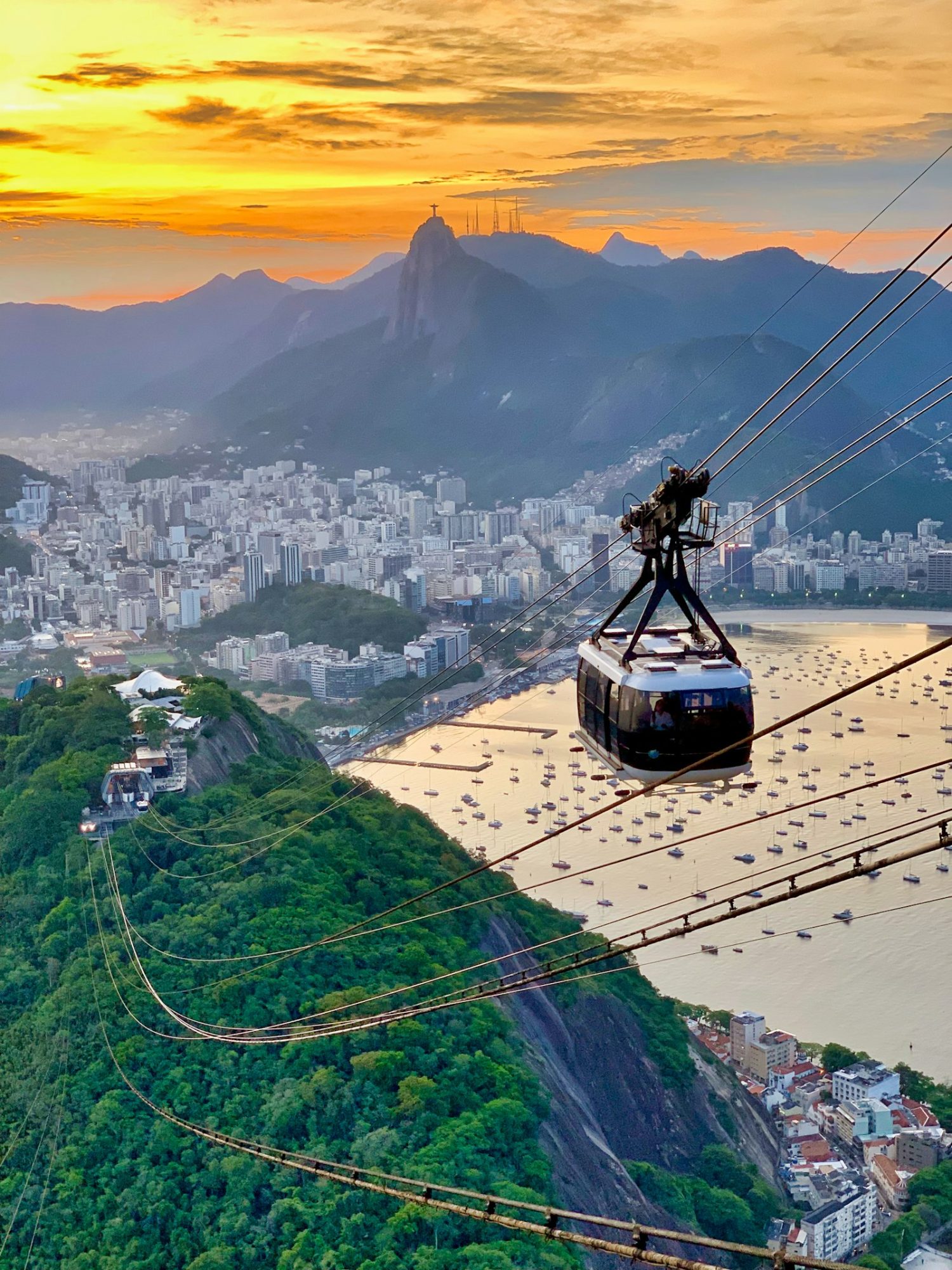
The Sugarloaf Cable Car above Rio de Janeiro at sunset.
For an established attraction, that means asking a more useful question than “How do we sell more tickets?” The better question is: “How do we generate more value from each hour of operating capacity and from each visitor who already arrives?”
A simple revenue model is:
Total attraction revenue = ridership × average ticket yield + ancillary spend + group/event/partnership revenue.
The most effective operators improve several parts of that equation together. They do not simply raise prices or add a gift shop. They redesign the visitor journey so that pricing, pre-booking, throughput, hospitality, premium products and destination partnerships reinforce one another.
1. Start with the four revenue levers
Before launching new products, establish which part of the revenue model is actually constrained.
- Ridership: how many guests visit, and where is demand being lost?
- Ticket yield: what is the average realised ticket revenue per rider after discounts and commissions?
- Ancillary spend: how much does each guest spend beyond the core ride?
- Capacity utilisation: how much of available operating capacity is used by hour, day, season and weather condition?
This prevents a common mistake: investing in demand generation when the real bottleneck is queues, booking friction, low conversion, poor capacity allocation or a weak on-site offer.
2. Move from flat pricing to demand-based pricing
A single price for every departure leaves money on the table when demand varies materially by time, day or season.
Demand-based pricing does not have to mean aggressive surge pricing. It can start with a controlled structure:
- peak and off-peak ticket bands;
- advance-purchase incentives;
- premium pricing for high-demand time slots;
- family, resident or multi-journey products where they support strategic demand;
- limited-capacity premium products such as fast track or private-cabin experiences.
Transport for London currently uses peak/off-peak and advance-purchase mechanics for the IFS Cloud Cable Car, including selected online discounts for advance bookings. That is a useful reminder that even a mature cable-car product can segment demand by booking behaviour and time of travel.
The objective is not simply to charge more. It is to improve yield while spreading visitors across time slots so fixed capacity is fully used — shifting price-sensitive visitors toward quieter periods and protecting the experience during peak demand.
3. Increase pre-booking and protect effective capacity
A cable car may have a high theoretical hourly capacity and still lose revenue because guests face uncertainty, long queues or poor time-slot management. Pre-booking improves the operator’s view of future demand. Timed inventory can help smooth arrivals, improve staffing decisions and reduce the number of guests who abandon the purchase because the experience feels unpredictable.
Capacity management should be treated as a commercial tool, not only an operations issue. Improvements can include:
- clearer time-slot inventory;
- mobile-first checkout;
- fast, visible confirmation and ticket delivery;
- queue redesign at terminals;
- separate flows for pre-booked guests and walk-ins;
- better boarding procedures and load management;
- integration with tour operators so group arrivals are predictable.
At Rio’s Sugarloaf Cable Car, Grupo Iter’s operating team combined commercial and operational changes rather than treating them separately. Between 2018 and 2024, ridership increased by over 50% despite the disruption of 2020–21. A revamped booking and queuing system was one of the measures used to increase effective daily capacity.
4. Treat ancillary spend as a second revenue engine
For many scenic ropeways, the ride is only one part of the guest’s total willingness to spend.
The highest-potential ancillary categories are usually those that fit naturally into the visitor journey:
- food and beverage;
- retail and souvenirs;
- photography;
- premium cabins or viewing products;
- guided or interpreted experiences;
- priority access;
- family activities;
- events and private functions;
- adjacent attractions such as luge, zip-line or nature experiences.
The commercial principle is simple: give guests more relevant reasons to spend, rather than adding unrelated retail.
At Sugarloaf, operational changes included upgraded F&B and retail offers across the attraction and new “second-gate” products, which led to average spend per visitor more than doubling between 2018 and 2024. That is a powerful example of why revenue per visitor can matter as much as raw ridership.
5. Create premium products around time, access and occasion
A ropeway has scarce inventory that can be packaged differently without changing the core transport system. Examples include:
- sunrise or sunset departures;
- private or semi-private cabin products;
- fast-track access;
- photography packages;
- dining-and-ride combinations;
- proposal, wedding or celebration products;
- wellness sessions at a summit location;
- corporate events and private venue hire.
These products work because they monetise three things visitors value: timing, exclusivity and occasion.
Banff Gondola, for example, markets summit dining and group-event experiences in addition to the lift itself. Its event offer includes multiple venues and catering at the summit. The lesson is not that every attraction needs a restaurant or event centre. It is that a distinctive terminal or summit can become a venue, not merely a place passengers pass through.
6. Build packages with complementary attractions and transport
Bundling can increase conversion and make the experience easier to buy, particularly for visitors planning an unfamiliar destination. Useful partners can include:
- scenic railways;
- river or harbour cruises;
- hotels and resorts;
- tour operators;
- visitor attractions;
- national-park or cultural experiences;
- local transport providers.
Skyrail Rainforest Cableway in Cairns combines its cableway with the Kuranda Scenic Railway, creating a full-day itinerary rather than selling only a one-way transport product. London’s IFS Cloud Cable Car also sells joint cable-car and river products.
For the operator, the key is to measure package economics after commissions, not just package volume. A high-volume package can destroy yield if distribution costs and discounting are not controlled.
7. Turn stations into destinations
Stations are often the most under-monetised part of a ropeway asset. A terminal can support much more than ticketing if dwell time and location allow it. Opportunities include:
- destination F&B;
- local retail;
- exhibition or interpretation space;
- viewing decks;
- event space;
- children’s activities;
- branded photography points;
- partner activations;
- seasonal programming.
The objective is not to make the station feel like a shopping centre. The best station concepts extend the story of the destination and create reasons to arrive earlier, stay longer or return.
8. Use tour operators strategically, not passively
Tour operators and destination partners can be a major source of volume, especially in international tourism markets. But the operator should know exactly what each channel contributes. Track by channel:
- riders;
- net ticket yield after commission;
- ancillary spend;
- cancellation and no-show behaviour;
- peak-time concentration;
- customer mix and origin;
- repeat or referral value.
A channel that fills low-demand periods at an acceptable net yield may be highly valuable. The same channel may be less attractive if it displaces full-price direct demand at peak times.
9. Build a shoulder-season and year-round product
Many ropeway attractions inherit the seasonality of their destination. Revenue growth therefore depends partly on creating reasons to visit outside the obvious peak. Options include:
- seasonal events;
- food-led programming;
- school and educational products;
- local-resident campaigns;
- night-time experiences;
- wellness and fitness events;
- corporate groups;
- festivals and destination partnerships.
A year-round strategy should be based on local demand and weather reality. The goal is not to force demand into periods when the attraction cannot operate reliably, but to find commercially viable demand in periods with spare capacity.
10. Fix operational leakage before adding more marketing
Additional marketing does not create value if the asset cannot convert demand into completed visits. Before materially increasing acquisition spend, check:
- unplanned downtime;
- weather-related closure patterns;
- queue abandonment;
- transaction failures;
- cabin loading efficiency;
- staffing constraints;
- maintenance bottlenecks;
- station congestion;
- late openings or early closures;
- guest complaints that reduce conversion or repeat demand.
For ropeways, operating performance and commercial performance are inseparable. A capacity improvement can be a revenue project. A maintenance decision can be a customer-experience decision. A better booking system can be both.
11. Track the KPIs that explain revenue, not just the revenue total
A useful operator dashboard should include at least:
- total ridership;
- riders by channel;
- average realised ticket yield;
- ancillary revenue per visitor;
- F&B and retail spend per visitor;
- pre-booked share of tickets;
- direct-booking share;
- conversion rate;
- capacity utilisation by time slot;
- operating availability;
- revenue per operating hour;
- EBITDA margin and cash conversion;
- guest satisfaction or NPS.
The purpose is diagnostic. If revenue is down, the team should be able to see whether the cause is demand, price, mix, spend, capacity or availability.
What Sugarloaf illustrates: revenue growth is an operating system
The most important lesson from Sugarloaf is not a single tactic. Grupo Iter’s case combines tighter tour-operator relationships, better booking and queuing, upgraded F&B and retail, and new premium products such as sunrise tickets and mountaintop wellness activities.
Under this operating model, both gross revenue and EBITDA grew at strong double-digit annual rates over a multi-year period, with meaningful margin expansion along the way. The growth came from both ridership and higher spend per visitor.
That is the core investment logic for an under-optimised ropeway asset: the system does not need to become a different attraction. It needs a coordinated commercial and operating model that extracts more value from the destination, the installed infrastructure and the existing visitor base.
Frequently asked questions
What is the fastest way to increase cable-car revenue?
For an established attraction with proven demand, the fastest opportunities are often pricing, pre-booking, capacity management and conversion improvements because they can use existing infrastructure. Ancillary products can then raise spend per visitor. The right sequence depends on where the current bottleneck sits.
Should a gondola attraction use dynamic pricing?
Often yes, if demand varies materially by date or time. Dynamic pricing should be designed to manage demand and protect yield, not simply to raise prices. Peak/off-peak structures and advance-purchase incentives are usually easier starting points than highly variable real-time pricing.
How much revenue should come from F&B, retail or other ancillary products?
There is no universal benchmark. The relevant measure is incremental profit per visitor after staffing, cost of goods, space and operating complexity. A strong ancillary offer should improve the guest experience as well as revenue.
Can a smaller ropeway use the same revenue strategies as a major attraction?
Yes. The tools scale down: timed booking, differentiated pricing, local partnerships, premium time slots, photography, simple F&B, retail and events can all work at smaller assets. The economics simply need to match the visitor base and operating footprint.
When should an owner consider bringing in an operating or investment partner?
A partner can make sense when the asset has demand and strategic potential but lacks capital, specialist operating capability, commercial systems or succession capacity. The key is to identify whether the constraint is operational, financial or structural before deciding on the partnership model.
Sources and reference examples
Transport for London — IFS Cloud Cable Car fares; Skyrail Rainforest Cableway — Plan Your Visit; Banff Gondola — Group Events.