
Investment
What Investors Look for in a Ropeway or Gondola Asset
A ropeway or gondola becomes attractive to investors when it combines durable visitor demand with defensible operating rights, reliable infrastructure, credible cash flow and a clear path to improve earnings without taking disproportionate technical or permitting risk.
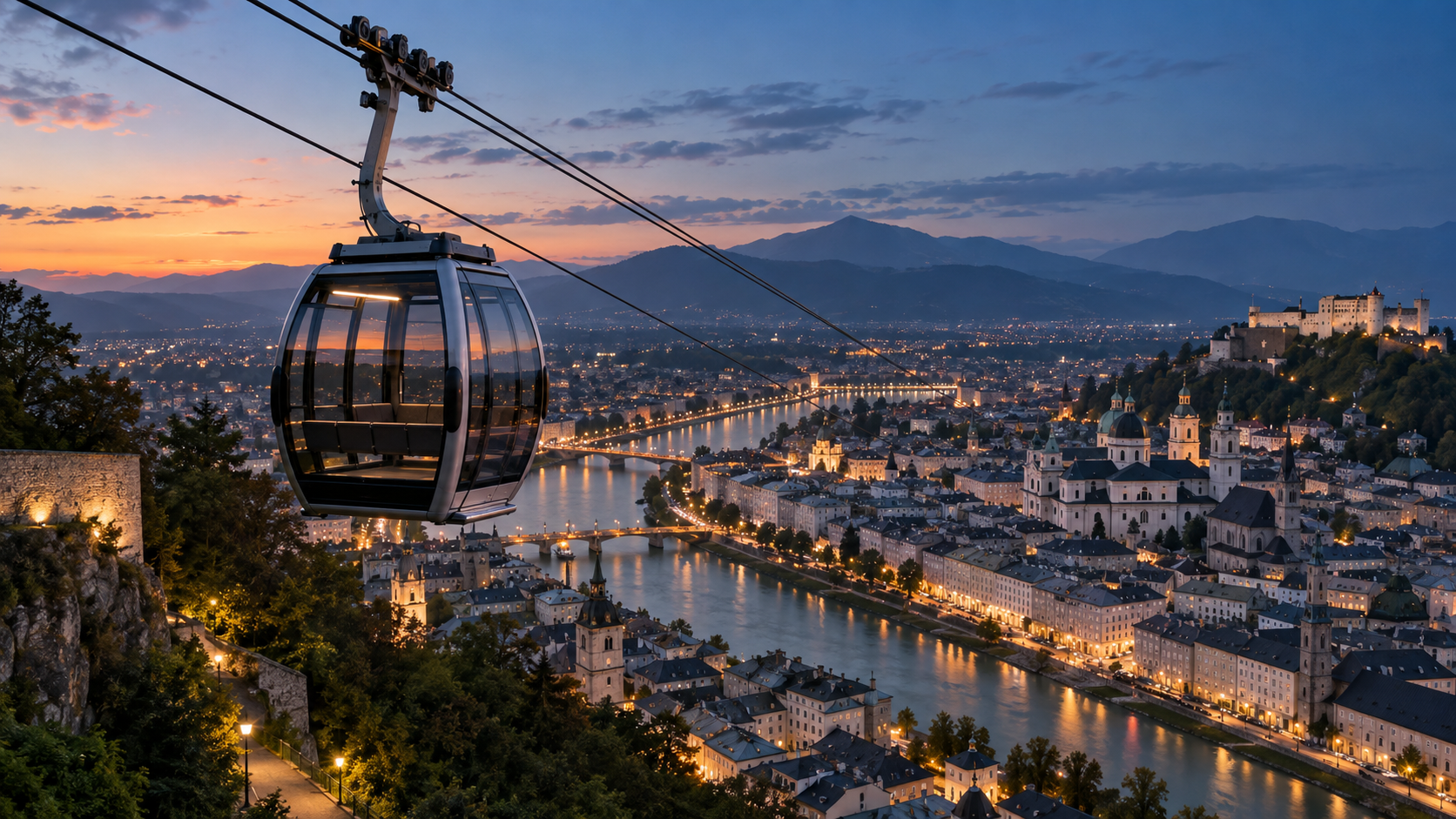
A gondola cabin crossing above a city at dusk.
Most investment decisions come down to the interaction of several variables rather than one headline metric. High ridership is valuable, but not if ticket yield is weak and maintenance capex is about to spike. Strong EBITDA is attractive, but less so if the concession expires soon. A spectacular location matters, but only if the asset can convert that location into repeatable visitor demand and commercial spend.
1. Destination quality and proven demand
Investors want to understand why people come, how durable that demand is and what protects it from competition. They review ridership history, visitor growth in the destination, seasonality, weather sensitivity, international versus domestic mix, tour-operator concentration, local access and competing attractions.
2. Pricing power and realised ticket yield
Headline ticket price is less important than average realised ticket yield after discounts, commissions, group rates and promotions. Investors look at historical price increases, direct versus third-party sales, distribution cost, peak versus off-peak willingness to pay and demand for premium products.
3. Revenue beyond the ride
At a point-of-interest tourism asset, the ropeway can be the gateway to a wider visitor economy. That makes ancillary revenue strategically important. Relevant categories include food and beverage, retail, photography, events, premium access, guided experiences, adjacent attractions, parking and venue hire.
At Rio’s Sugarloaf Cable Car, improvements including upgraded F&B and retail offers and new “second-gate” products — such as sunrise tickets and mountaintop wellness activities — led to average spend per visitor more than doubling between 2018 and 2024.
4. EBITDA quality, not just EBITDA size
Investors normalise reported earnings before they value them. They ask whether EBITDA is supported by repeatable operations or temporarily inflated by deferred maintenance, unusually low staffing, one-off events or accounting choices.
A lower but highly predictable EBITDA stream can be more investable than a larger, volatile one with hidden future capex.
5. Technical condition and remaining asset life
A ropeway is specialist infrastructure, so technical condition directly affects valuation and deal structure. Investors review system type and manufacturer, installation and modernisation dates, inspection history, maintenance records, availability, downtime, component replacement cycles, spare-parts availability, obsolescence risk and required modernisation capex.
The central question is not simply whether the system operates today. It is what capital will be required to keep it operating safely, reliably and commercially over the planned holding period.
6. Concession, land and operating rights
A ropeway can have excellent economics and still be difficult to invest in if the legal right to operate is unclear or too short. Diligence typically covers concession terms, renewal mechanisms, land ownership or leases, easements, station property rights, operating licences, environmental approvals, change-of-control provisions and government agreements.
7. Capacity and the cost of unlocking more capacity
A busy ropeway can be attractive because demand is proven. Investors will still want to know whether the system can accommodate more demand and what it costs to unlock it. Capacity analysis should cover passengers per hour, loading efficiency, queues, station congestion, cabin utilisation, booking control, opening hours, weather constraints and maintenance windows.
Some of the highest-return capacity improvements are operational rather than construction-led. Booking changes that spread visitors across time slots, plus queuing, staffing and boarding changes, can increase effective daily throughput using existing infrastructure.
8. A credible growth plan with identifiable levers
Investors prefer a value-creation plan that can be explained in operating terms. A generic assumption that tourism will grow is not enough. A stronger plan identifies specific levers such as increasing direct online sales, improving ticket yield, extending operating hours, improving peak throughput, upgrading F&B and retail, introducing premium products, reducing downtime or developing underused station real estate.
The best plans distinguish between initiatives that require major capital and those that mainly require operating capability.
9. Management capability and operational systems
A specialist asset is only as investable as the organisation behind it. Investors assess technical leadership, safety culture, maintenance discipline, commercial management, finance and reporting, staff retention, training systems, emergency procedures and supplier relationships.
Where an owner is also the key operator, commercial lead and technical decision-maker, key-person dependency can become a transaction issue. A business that can operate through systems rather than one individual is easier to finance, partner with and sell.
10. Data quality and transaction readiness
A strong asset can lose investor confidence if information is incomplete or inconsistent. A transaction-ready data room should normally include financial statements, monthly ridership and revenue data, ticket yield, ancillary spend, capex history, maintenance and inspection records, permits, concessions, leases, insurance, material contracts, staff structure and forecasts with clear assumptions.
The investor should be able to reconcile operational performance with financial performance. If ridership changed materially, the data should show how that flowed into ticket revenue, ancillary spend, staffing, EBITDA and cash.
11. Brownfield value-add versus greenfield risk
Elevate Collection’s strategy explicitly considers both existing attractions with operational upside and ground-up ropeway developments.
For a brownfield asset, investors can diligence historical ridership, operating costs, pricing, technical performance and actual cash generation. The principal questions are usually valuation, capex backlog and how much improvement remains.
For a greenfield project, more of the investment case rests on forecasts. Key risks shift toward planning, permits, land rights, construction cost, technology selection, financing and demand ramp-up.
Neither route is inherently better. They are different risk profiles and should be underwritten differently.
A practical investor scorecard
An investor assessing a ropeway or gondola will typically form a view across ten dimensions: destination quality, demand, pricing power, ancillary revenue, profitability, technical condition, operating rights, growth potential, management capability and future exitability.
For owners, the strongest preparation is not cosmetic. It is to make the economics, technical condition, rights and growth plan easy to verify.
Frequently asked questions
What makes a cable car business valuable?
Value is usually driven by sustainable EBITDA, long-term operating rights, technical condition, destination strength, future capex requirements and identifiable growth opportunities. No single revenue or ridership multiple captures all of those factors.
Do investors prefer high ridership or high ticket prices?
Neither in isolation. Investors care about total economics: realised ticket yield, capacity, ancillary spend, operating margin and the durability of demand.
How important is the age of a gondola system?
Age matters, but maintenance condition and future capex matter more. Investors will review inspection history, major component cycles, obsolescence risk, manufacturer support and the cost of keeping the system reliable over the investment period.
What documents should an owner prepare before approaching investors?
Start with financial statements, monthly ridership and revenue data, capex history, maintenance records, technical inspections, permits, concessions, leases, insurance, key contracts, organisational information and a forecast whose assumptions can be reconciled to operating data.
Can an underperforming ropeway still attract investment?
Yes, particularly when the destination and infrastructure are strong and the underperformance is operational rather than structural. Assets can be attractive when an investor or operating partner can clearly identify how to improve pricing, distribution, capacity, ancillary revenue or costs.